
What Exactly is Expressive Language?
- karentspeech
- Sep 6, 2025
- 3 min read
Updated: Jun 28

"Guess What I Did Today!” - The Magic of Expressive Language in Kids
Have you ever waited (maybe a little impatiently!) for your child to finally tell you about their day? The back-and-forth communication with your child - that’s expressive language in action. Expressive language is more than just talking; it’s how kids share their ideas, needs, feelings, and stories with the world. And here’s the exciting part: as parents, you play a huge role in helping those little voices grow stronger, clearer, and more confident.
What Exactly Is Expressive Language?
Think of expressive language as your child’s personal toolkit for communication. It includes:
Vocabulary – the words they know and use (from “ball” to “astronaut”).
Sentence Structure – how they string words together into ideas.
Fluency – the rhythm and flow of their speech.
Non-Verbal Communication – all those gestures, facial expressions, and body language that add extra meaning.
In short: expressive language is how kids tell the world what’s on their mind and in their heart.
Why Does Expressive Language Matter?
Strong expressive language skills open doors everywhere:
Social Smarts – Kids can join games, share stories, and build friendships.
School Success – Talking through ideas helps with reading, writing, and classroom participation.
Emotional Growth – Being able to say “I’m mad” or “I’m excited” helps children manage big feelings and connect with others.
What Does Typical Development Look Like?
Every child is unique, but here are some general milestones:
Around 12 Months – Babbling and saying simple words like “mama” or “dada.”
By 18 Months – About 10–25 words, maybe starting to pair two together (“more juice!”).
By 2–3 Years – Vocabulary explodes (200+ words!) and short sentences appear.
By 4–5 Years – More complex sentences, storytelling, and even jokes.
Remember, these are guidelines, not rigid rules. Kids bloom in their own time.
Parent Tips: Simple Ways to Support Expressive Language
Here are some easy, everyday strategies you can use to boost your child’s expressive language:
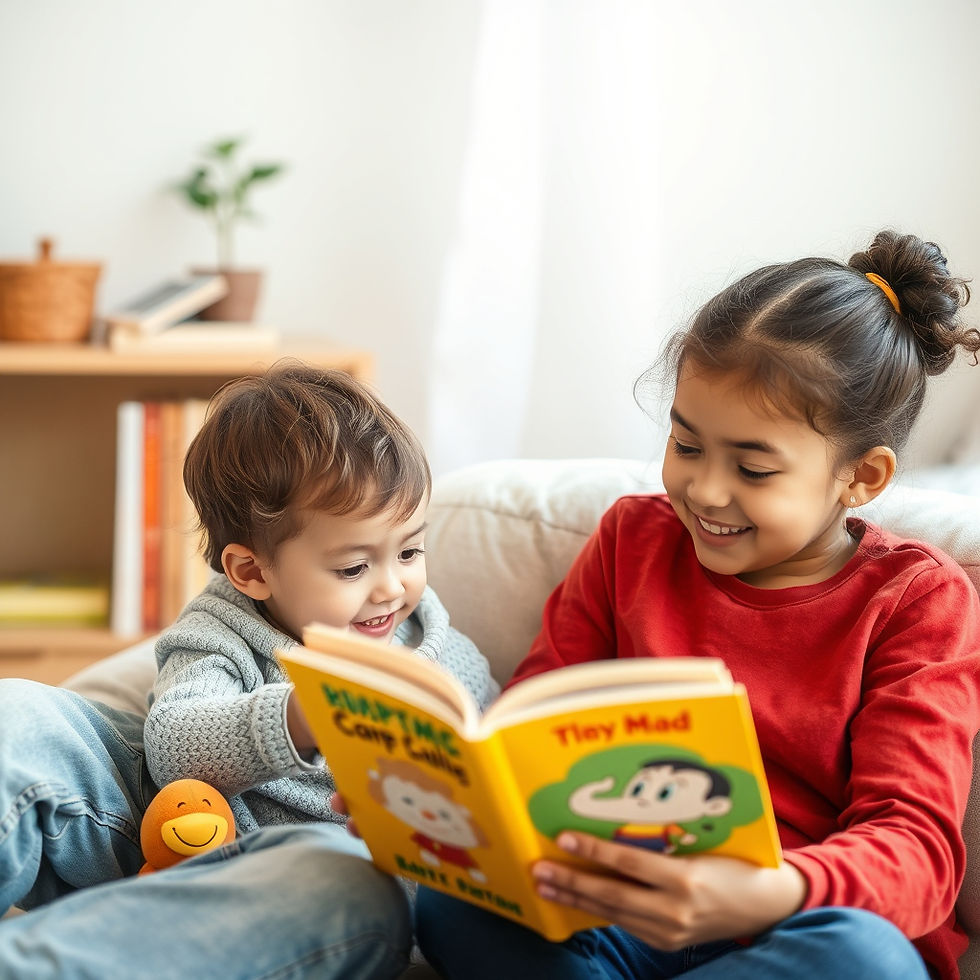
Read Together Daily – Choose fun, colorful books. Pause to ask questions like, “What do you think will happen next?” or “How do you think the character feels?”
Talk About Your Day – Narrate what you’re doing (“I’m cutting the apple. It’s crunchy and sweet!”) and ask your child to share their own experiences.
Use Open-Ended Questions – Instead of “Did you have fun?” try “What was the best part of your day?”
Encourage Pretend Play – Playing “restaurant,” “doctor,” or “superhero” helps kids practice new words and storytelling.
Sing and Rhyme – Music and rhymes make words memorable and fun. Don’t be afraid to get silly!
Celebrate Attempts – Even if your child mixes up words or grammar, praise the effort and gently model the correct version.
Create Opportunities to Share – Family meals, game nights, or even car rides are great times to encourage conversation.
Growing Confident Communicators
Expressive language isn’t about “perfect speech”, it’s about giving your child the tools to share their world with you. Celebrate each new word, each funny sentence, and each story they proudly tell. Be patient, encourage them, and enjoy the incredible journey of watching their voice and confidence grow. At the end of the day, there’s nothing sweeter than hearing your child say, “Mom, Dad… guess what?”

Karen Taylor, M.S., CCC-SLP, CAS
Speech-Language Pathologist
Founder, Universal Speech Strategies
"Helping parents and professionals build communication through practical, evidence-based strategies."

Comments