
All Things Autism


Autism shows up differently in every child and that’s exactly why our support must be flexible, practical, and rooted in understanding. Whether you’re a speech-language pathologist, teacher, therapist, or support staff, having a clear foundation in autism characteristics, communication differences, and evidence-based strategies helps you move from “Where do I start?” to “I know how to help.” This page brings together the essentials including real-world insights, tools, and approaches you can use right away to better support autistic learners in your classroom, clinic, or community.
Why Routines Matter in a Classroom


If there’s one thing I’ve learned in my years of working with children with autism, it’s this: routines are powerful. They aren’t just helpful, they’re essential. A predictable, well-structured classroom creates an environment where children feel safe, calm, and ready to learn.
Throughout my career, I’ve spent a great deal of time in separate classrooms supporting students with autism, and the difference that routines make is unmistakable. In highly structured classrooms, children are more engaged, behaviors decrease, and learning flourishes. But when routines are unclear or inconsistent, chaos can take over—leaving students overwhelmed and teachers feeling exhausted.
As an SLP working within the school system, part of my role is to support the classroom as a whole. That often means helping teachers create consistency, build routines, and use visual supports that guide students through their day. There’s nothing more rewarding than seeing a frazzled teacher find relief when structure brings calm—or watching a child thrive because they finally know what to expect.
When children understand the rhythm of their day, their anxiety goes down, their confidence goes up, and their opportunities for communication and learning grow.
Ready to Learn More About How Routines Can Transform Your Classroom?


Supporting Students with Autism in the Inclusive Classroom


Do you find yourself wanting to pull your hair out due to regular and consistent behaviors in the classroom making it almost impossible to teach? Elementary classrooms are busy, loud, unpredictable places. For many students, that’s exciting. For students with autism, it can feel overwhelming.
The good news?
Small, thoughtful changes in how we structure the environment, communicate, and teach can make the difference between a child merely “getting through the day” and truly thriving.
After years of working in elementary schools alongside teachers, therapists, and families, I’ve learned this: Success rarely comes from one big intervention. It comes from dozens of small supports used consistently.
Here are the strategies that matter most:
1. Create Predictability with Visual Structure
Students with autism often spend extra energy just trying to
figure out:
-
What am I supposed to do?
-
When will this end?
-
What happens next?
When we remove that uncertainty, behavior improves almost
immediately.
Try this:
-
Daily visual schedules (whole class or individual)
-
First–Then boards
-
Visual task checklists
-
Clearly labeled spaces and materials
-
Consistent routines for transitions
Visuals reduce language demands and give students a concrete “roadmap” for the day.
Predictability = less anxiety = more learning.
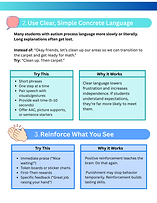
2. Use Clear, Simple, Concrete Language
Many students with autism process language more slowly
or literally. Long explanations often get lost.
Instead of:
“Okay friends, let’s clean up our areas so we can transition
to the carpet and get ready for math.”
Try:
“Clean up. Then carpet.”
Try this:
-
Short phrases
-
One step at a time
-
Pair speech with visuals/gestures
-
Provide wait time (5–10 seconds)
-
Offer AAC, picture supports, or sentence starters
Clear language lowers frustration and increases independence.
If students understand expectations, they’re far more likely to meet them.
3. Reinforce What You Want to See
We sometimes spend most of the day correcting.
But students grow fastest when we notice success.
Try this:
-
Immediate praise (“Nice waiting!”)
-
Token boards or sticker charts
-
First–Then rewards
-
Specific feedback (“Great job raising your hand”)
Why it works: Positive reinforcement teaches the brain: Do that again. Punishment may stop behavior temporarily. Reinforcement builds lasting skills.
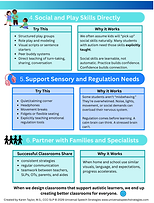
4. Support Sensory and Regulation Needs
Some students aren’t “misbehaving.” They’re
overwhelmed. Noise, lights, movement, or social
demands can overload their nervous system.
Try this:
-
Quiet/calming corner
-
Headphones
-
Movement breaks
-
Fidgets or flexible seating
-
Explicitly teaching emotional regulation tools
Regulation comes before learning. A calm brain can think.
A stressed brain can’t.
5. Teach Social and Play Skills Directly
We often assume kids will “pick up” social skills naturally. Many students with autism need those skills explicitly taught.
Try this:
-
Structured play groups
-
Role play and modeling
-
Visual scripts or sentence starters
-
Peer buddy systems
-
Direct teaching of turn-taking, sharing, conversation
Social skills are learnable, not automatic. Practice builds confidence.
Confidence builds connection.
6. Partner with Families and Specialists
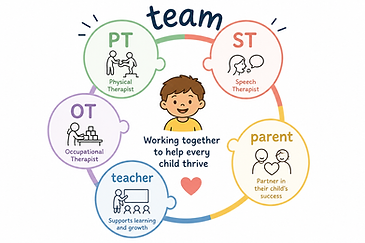
No one supports a child alone. The most successful classrooms I’ve seen share:
-
consistent strategies
-
regular communication
-
teamwork between teachers, SLPs, OTs, parents, and aides
When home and school use similar visuals, language, and expectations, progress accelerates.




Working with students with autism isn’t about “fixing” children. It’s about:
-
reducing barriers
-
building communication
-
creating safety
-
teaching skills explicitly
-
and honoring how each child’s brain works
When we design classrooms that support autistic learners, we end up creating better classrooms for everyone. Behaviors are reduced, teachers can teach, children can learn. That’s the kind of inclusive education every child deserves.
Like What You Just Read?
Download a Free Printable

Tool
What it is
How it Helps
Visual Example
Behavior Supports
Visuals that show expected behaviors (e.g., “quiet hands,” “walk feet,” “listening”).
Helps students understand classroom expectations and reduces challenging behaviors.
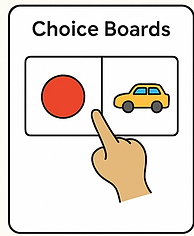
Choice Boards
First-Then Board

A board showing 2–6 picture options.
Supports decision-making, increases communication, and reduces frustration.
A two-step board showing what happens first and what happens next.
Helps with transitions, motivation and anxiety


Schedules
A sequence of pictures representing the student’s day or part of the day.
Provides predictability, reduces anxiety, and increases independence.
Sequential Steps for Tasks

Step-by-step visuals for routines (handwashing, lining up, cleaning up, etc.).
Guides students through multi-step tasks and builds independence.

Visual Cue Cards
Small cards with reminders (e.g., “wait,” “sit,” “stop,” “look”).
Supports behavior, communication, and understanding during activities.

Core Boards
Displays pictures, symbols, words, or letters that a child can point to in order to express wants, needs, thoughts, and feelings.
Gives children a way to communicate, supporting language development with visual model of words and concepts. interactions.
