
Building Language in the Classroom
Language skills develop all day long, not just during reading or language arts. Every classroom interaction provides opportunities to build vocabulary, comprehension, problem-solving, and communication skills.
Kindergarten - 1st grade
Building a Strong Language Foundation
At this age, children are learning new vocabulary rapidly and developing the language needed to understand directions, answer questions, and share ideas.
Try These Strategies:
1. Teach Vocabulary Throughout the Day
-
Introduce and explain new words before lessons.
-
Use pictures, gestures, and real objects whenever possible.
-
Repeat new words frequently in different activities.
2. Expand Student Responses
-
Child: "Dog."
-
Teacher: "Yes, that's a big brown dog"
3. Think Out Loud
-
Model your thinking during activities.
-
"I'm looking at the picture. I notice dark clouds, so I predict it might rain"
4. Use Visual Supports
Visual schedules
Picture direction
Graphic organizers
5. Read and Discuss
Pause during reading to ask:
-
Who?
-
What?
-
Where?
-
What happened next?
6. Encourage Turn-Taking Conversations
-
Partner sharing
-
Circle time discussions
-
Show-and-tell activities
2nd–3rd Grade
Expanding Vocabulary and Thinking Skills
Students are moving beyond simple language and beginning to explain, compare, predict, and describe their thinking.
Try These Strategies:
1. Teach Academic Vocabulary Explicitly
-
Introduce words before lessons.
-
Connect new vocabulary to familiar concepts.
-
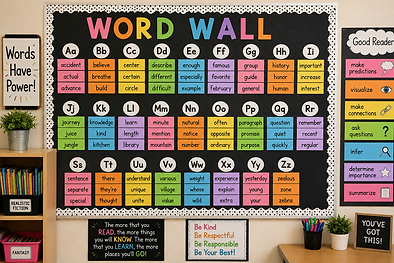
Create classroom word walls.
2. Ask Open-Ended Questions
Instead of:
-
"Did the character feel sad?"
Try:
-
"How do you think the character felt? What makes you think that?"
3. Encourage Complete Sentences
-
Model and reinforce expanded responses.
-
Provide sentence starters when needed.
4.Use Compare and Contrast Activities
-
Similarities and differences
-
Venn diagrams
-
Sorting activities
5. Promote Retelling Skills
-
Retell stories in sequence.
-
Use beginning, middle, and end organizers.
6. Support Small Group Discussions
-
Think-Pair-Share
-
Partner problem solving
-
Collaborative projects


Language Skills Being Built
✓ Vocabulary
✓ Following directions
✓ Answering Questions
✓ Sentence Development
✓ Story Comprehension

Download Today!

Partner share activity

Language Skills Being Built
✓ Describing
✓ Explaining
✓ Comparing and Contrasting
✓ Sequencing
✓ Inferencing
✓ Narrative Language
Collaborative project
Use This Sort it in Your Class
4th-5th Grade
Developing Higher-Level Language Skills
Older elementary students are expected to use language to learn, reason, analyze, and support their ideas.
Try These Strategies:
Teach Multiple Meanings of Words
-
Discuss figurative language.
-
Explore synonyms and antonyms.
-
Highlight content-specific vocabulary.
Require Evidence-Based Responses
-
"What evidence from the text supports your answer?"
Use Discussion-Based Learning
-
Literature circles
-
Classroom debates
-
Problem-solving discussions
Encourage Prediction and Inference
-
What clues helped you figure that out?
-
What do you think will happen next?
Teach Organizational Language
-
First, next, then, finally
-
Cause and effect
-
Problem and solution
Support Written Language Through Oral Language
-
Have students talk through ideas before writing.
-
Use partner discussions before assignments.

Language Skills Being Built
✓ Critical Thinking
✓ Inferencing
✓ Reasoning
✓ Perspective Taking
✓ Academic Vocabulary
✓ Explaining and Defending Ideas


Literature circle discussion
Partner share activity